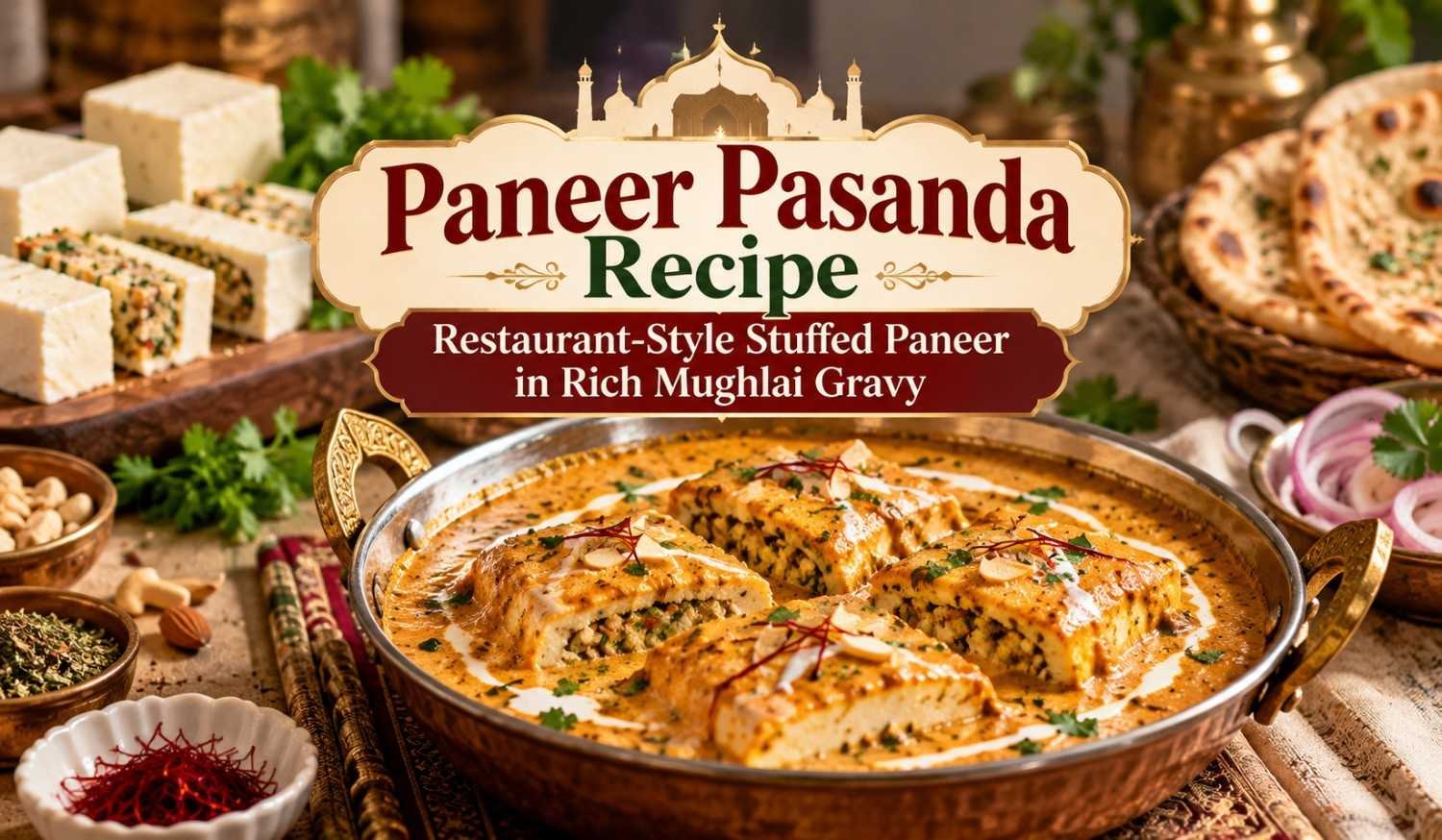
Paneer Pasanda Recipe: Restaurant-Style Stuffed Paneer in Rich Mughlai Gravy
About Paneer Pasanda: Origin and History
Paneer pasanda is a royal North Indian curry that traces its roots to the kitchens of the Mughal courts, where “pasanda” (from the Urdu and Persian word for “favourite”) described thin, tender slices of meat, traditionally lamb, simmered in a velvety gravy of yogurt, ground nuts, cream and fragrant spices. As vegetarian dining grew in popularity across Delhi, Lucknow, Punjab and Hyderabad, cooks adapted the same technique for paneer: thin triangles are sandwiched with a sweet-spiced filling of khoya, dry fruits and cardamom, lightly fried, and finished in a mildly sweet, cashew-thickened gravy. Today it is a celebrated dish on the menus of Mughlai restaurants and wedding banquets across North India, valued for its smooth texture, subtle sweetness and festive, special-occasion character. Recipes vary by region and family, so the stuffing, the level of sweetness and the use of curd differ from kitchen to kitchen.
Quick Facts
| Detail | Info |
| Cuisine | Mughlai / North Indian |
| Course | Main course (vegetarian) |
| Prep time | 25 minutes |
| Cook time | 35 minutes |
| Serves | 4 |
| Difficulty | Medium |
Cook’s Experience Notes
Having cooked this dish many times for family dinners, the gravy is where patience pays off. Slowly cooking the onion-tomato-cashew paste until the oil separates gives that deep restaurant flavour, and blending it very fine gives the silky finish. The most common home mistakes are frying the paneer too long (it turns chewy) and adding cold curd directly to a hot pan (it splits). Both are easy to avoid with the tips below.
Ingredients
| Component | Ingredient | Quantity |
| Paneer (Pasanda Base) | Full-fat paneer, cut into 8 thin triangles | 250 g |
| Cornflour or maida (for coating) | 2 tbsp | |
| Oil or ghee (shallow frying) | 3 tbsp | |
| Stuffing | Khoya or grated paneer | 3 tbsp |
| Chopped cashews, almonds and raisins | 2 tbsp | |
| Green cardamom powder | ¼ tsp | |
| Green chilli, finely chopped | 1 small | |
| Gravy Base | Onions, roughly chopped | 2 medium |
| Tomatoes, roughly chopped | 2 medium | |
| Cashews | 10-12 | |
| Ginger-garlic paste | 1 tbsp | |
| Whole spices (bay leaf, 2 cloves, 1 cardamom, small cinnamon stick) | 1 set | |
| Spices | Kashmiri red chilli powder | 1 tsp |
| Coriander powder | 1 tsp | |
| Garam masala | ½ tsp | |
| Kasuri methi, crushed | 1 tsp | |
| Salt | To taste | |
| Finish | Fresh cream | ¼ cup |
| Whisked thick curd (optional, room temperature) | 2 tbsp | |
| Sugar | ½ tsp | |
| Silver warq or chopped pistachios (garnish) | Optional |
Cooking Steps
- Prepare the paneer: Cut the paneer block into slabs about ½ cm thick, then into 8 triangles. Keep 4 as bases and 4 as tops. Pat dry with a paper towel.
- Make the stuffing: Mix khoya (or grated paneer), chopped nuts, raisins, cardamom powder and chopped green chilli with a pinch of salt.
- Stuff the paneer: Spread about 1 tsp stuffing on a base triangle, cover with a top triangle and press gently. Lightly dust with cornflour, shaking off the excess.
- Shallow fry: Heat oil or ghee in a non-stick pan on medium heat. Fry the stuffed paneer 1 minute per side until pale golden. Drain on paper and keep aside.
- Boil the gravy base: In the same pan, add the whole spices, onions, tomatoes and cashews with ½ cup water. Cook covered for 10-12 minutes until soft. Cool slightly and remove the whole spices.
- Blend: Blend to a very smooth paste, adding a little water if needed. For an extra silky gravy, strain the paste.
- Cook the masala: Heat 2 tbsp ghee, add ginger-garlic paste and sauté 1 minute. Pour in the paste and cook on low heat for 8-10 minutes, stirring often, until the oil starts to separate.
- Add spices: Stir in Kashmiri chilli powder, coriander powder and salt. Add ½ cup warm water and simmer for 5 minutes.
- Finish the gravy: Lower the heat and stir in the cream, crushed kasuri methi, garam masala and sugar. If using curd, whisk it well and add off the heat, stirring constantly.
- Add the paneer: Gently place the fried paneer pasanda into the gravy, spoon gravy over the top, cover and simmer 2 minutes. Do not stir hard.
- Rest and serve: Turn off the heat, let it rest 5 minutes, and garnish with pistachios or silver warq.
Practical Kitchen Tips
- Temper the curd: Bring curd to room temperature and whisk until smooth before adding, always off the heat, to prevent curdling.
- Fresh paneer matters: Fresh, soft, full-fat paneer holds shape better. If paneer is firm or store-bought, soak it in warm water for 10 minutes before use.
- Cashews give body: Soaking cashews for 15 minutes in hot water helps them blend into a smoother paste.
- Colour tip: Kashmiri chilli gives a vibrant red without too much heat. Avoid overcooking the masala, which darkens the colour.
- Balance sweetness: The sugar is only to round out acidity from the tomatoes. Adjust to taste.
Serving Style
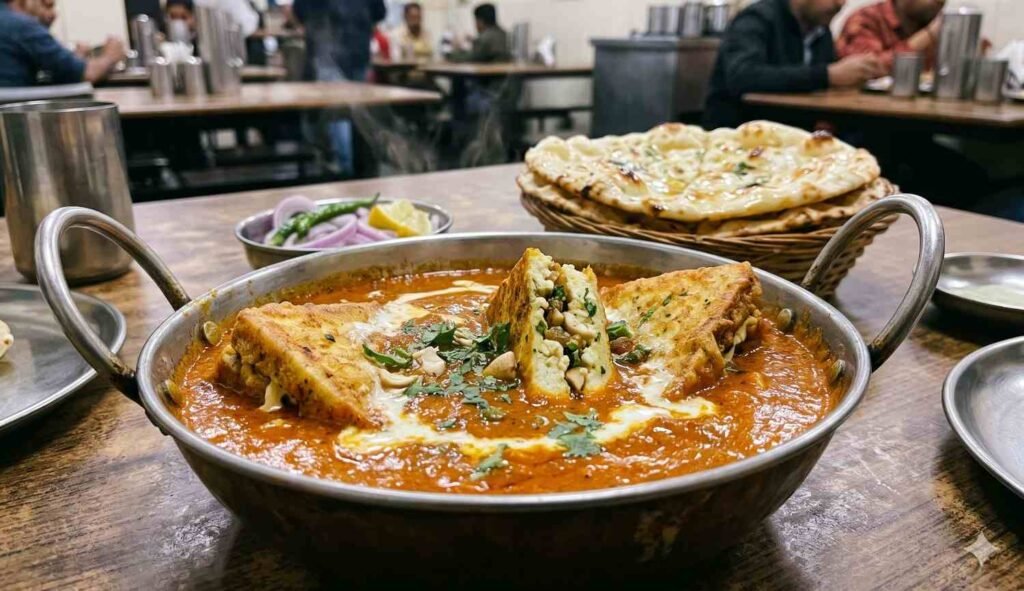
Serve paneer pasanda hot, with two stuffed paneer pieces per plate and a generous spoon of gravy over them. In North Indian restaurants it is traditionally paired with soft breads that soak up the creamy sauce. Try it with:
- Breads: Butter naan, garlic naan, roomali roti, or tandoori roti.
- Rice: Jeera rice, saffron pulao, or plain basmati rice.
- Sides: Sliced onion rings with lemon, green chutney, and a simple cucumber raita.
- Garnish: A swirl of cream, a sprinkle of chopped pistachios, and a thin silver warq for festive dinners.
- Occasions: Perfect for weddings, festive family meals, Diwali dinners and weekend special lunches.
FAQs
“Pasanda” comes from the Urdu/Persian word for “favourite” or “preferred cut”. The original Mughlai pasanda used thin slices of lamb. The paneer version borrows the same rich, nutty gravy and applies it to thin paneer slices, often stuffed.
Use fresh full-fat paneer, cut slices about ½ cm thick, and coat lightly in cornflour. Fry briefly on medium heat just until pale golden. Add the paneer to the gravy at the very end and simmer only 2 minutes, because longer cooking makes it rubbery.
Yes. Skip the sandwiching step and simply shallow fry the paneer triangles, then add them to the gravy. The stuffing adds a sweet, nutty surprise inside, but the gravy is the soul of the dish.
Both are creamy, mildly sweet and rich. Paneer pasanda is defined by the thin, often stuffed, shallow-fried paneer slices and a smoother, more delicate nut-based gravy. Shahi paneer usually uses plain cubes in a slightly tomato-forward gravy.
Yes. The gravy keeps in the fridge for 3 days and freezes for up to 2 months (without the cream). Reheat gently, add cream and the fried paneer just before serving for the best texture.